
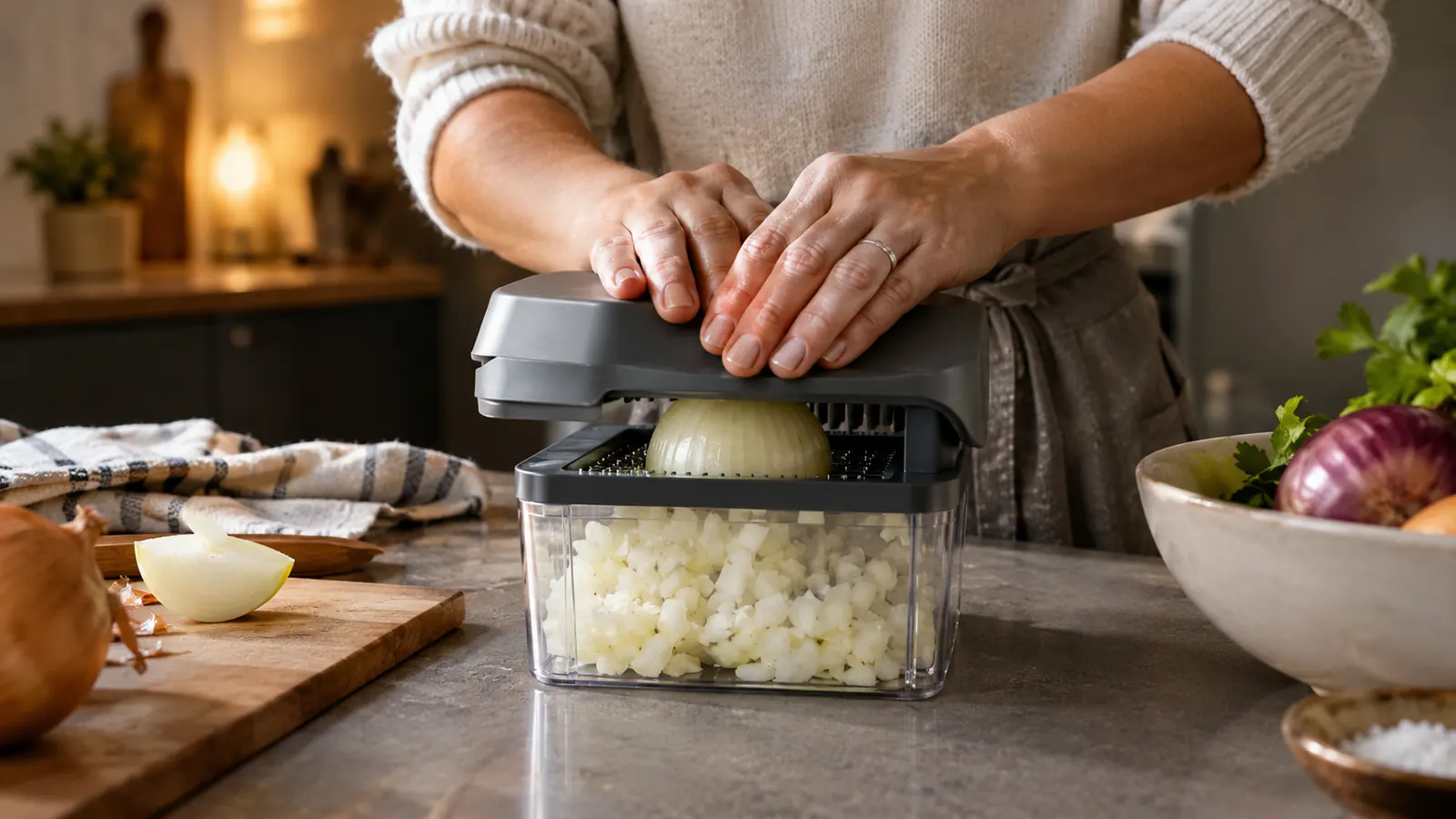
The Fullstar vegetable chopper sat in my online cart for three weeks before I finally ordered it. I kept talking myself out of it. Another gadget, I told myself. Another thing to wash and store. But I cook for six people most nights, which means I dice onions almost every single night, and by the third week I was tired of the tears and the pile of onion skins on my cutting board. So I ordered it, mostly hoping I would not have to admit to Mark that I had bought another kitchen thing we did not need. Six months later, it lives on my counter, not in a cabinet. In this house, that is the highest compliment I can give a kitchen tool.
I want to be clear about what this review is and what it is not. It is not a list of features copied off the box. It is six months of real weeknight cooking for a family of six, a handful of Sunday dinners after church, one church potluck, and a truly unreasonable number of onions. It is also the honest part that the ads skip: the cleanup, the learning curve with the spiralizer, the vegetables that come out squished, and the times I reached for my knife anyway. If you are trying to decide whether this chopper earns a spot in your kitchen, you should know all of it, not just the pretty part.
The Quick Verdict
A genuinely useful dicing tool for a big household, as long as you accept that the cleanup is part of the deal. I reach for it almost daily, and I would buy it again.
Amazon Check Today's Price →If you cook for a crowd, this is the chopper I would start with
The Fullstar chops onions, peppers and celery in seconds, and after six months it is still the first tool I grab on weeknights. See today's price on Amazon.
Amazon Check Today's Price on Amazon →How I've Used It
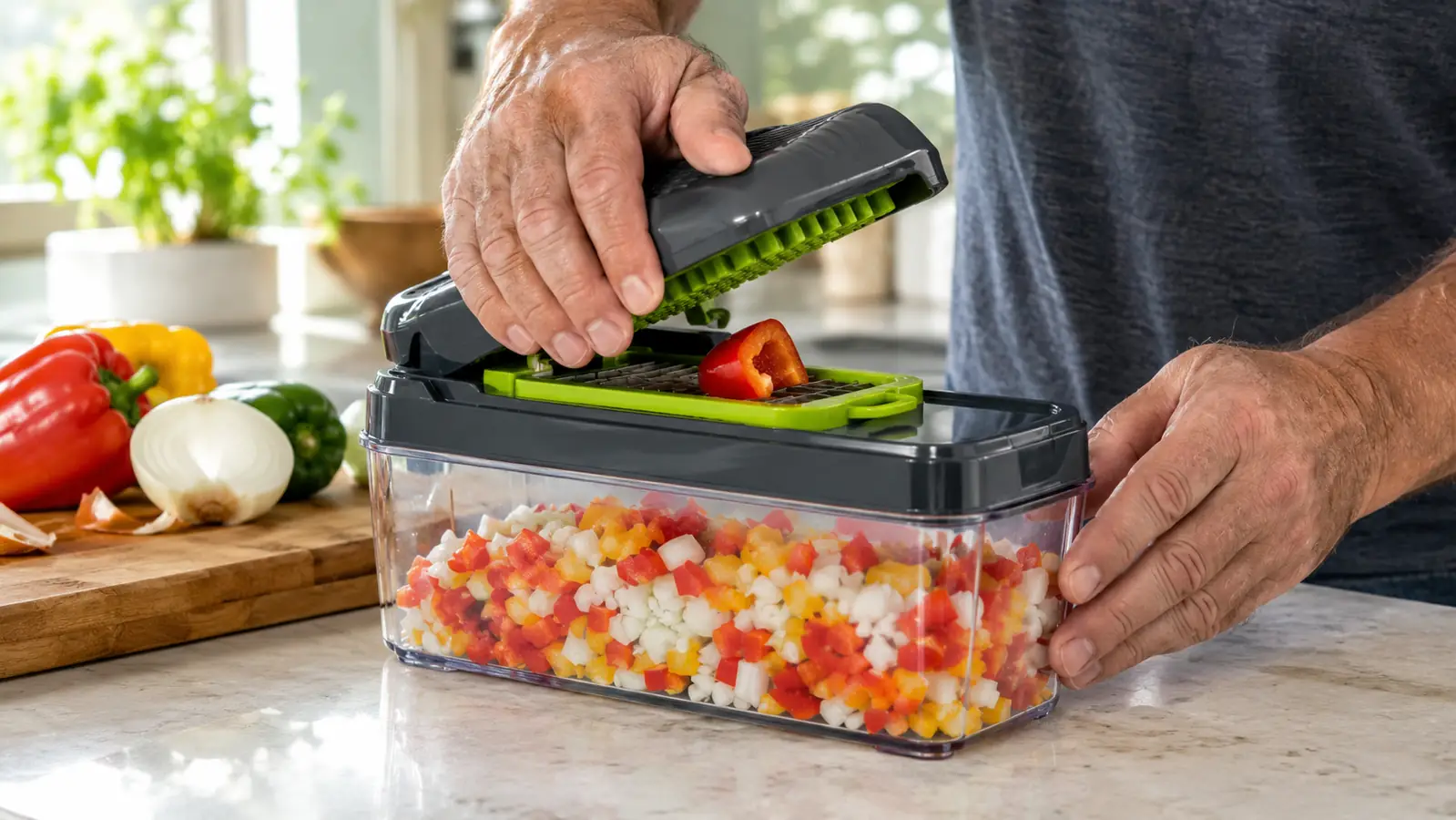
Most nights I use the Fullstar for the same three jobs: onions for taco night, peppers for fajitas, and celery for whatever soup is simmering. The routine is simple. I put a halved onion into the container, press the top down, and a few seconds later I have dice. Not perfect dice, but honest, even dice that cook evenly and look fine in salsa. The container catches everything, so I skip the cutting board mess entirely and dump the results straight into the pan.
I have used it for pico de gallo on summer evenings, for the pepper and onion mix that goes into Mark's breakfast burritos, for the carrots that disappear into Sunday pot roast, and for a truly enormous batch of celery for the church potluck. It is not a tool that does one trick. It is the tool that makes the boring, repetitive part of dinner faster, which matters when you are on a clock between school pickup and practice.
The included container holds a solid batch, enough for a family of six, though for a big potluck I work in two rounds. The four blades cover the jobs I actually need, and the spiralizer turns zucchini into noodles on the nights we are trying to eat a little lighter. I will be honest: the spiralizer took me three tries before the noodles looked like noodles. But once I figured out the pressure and the pace, it became the reason we eat zucchini noodles at all.
The Part Nobody Warns You About: Cleanup
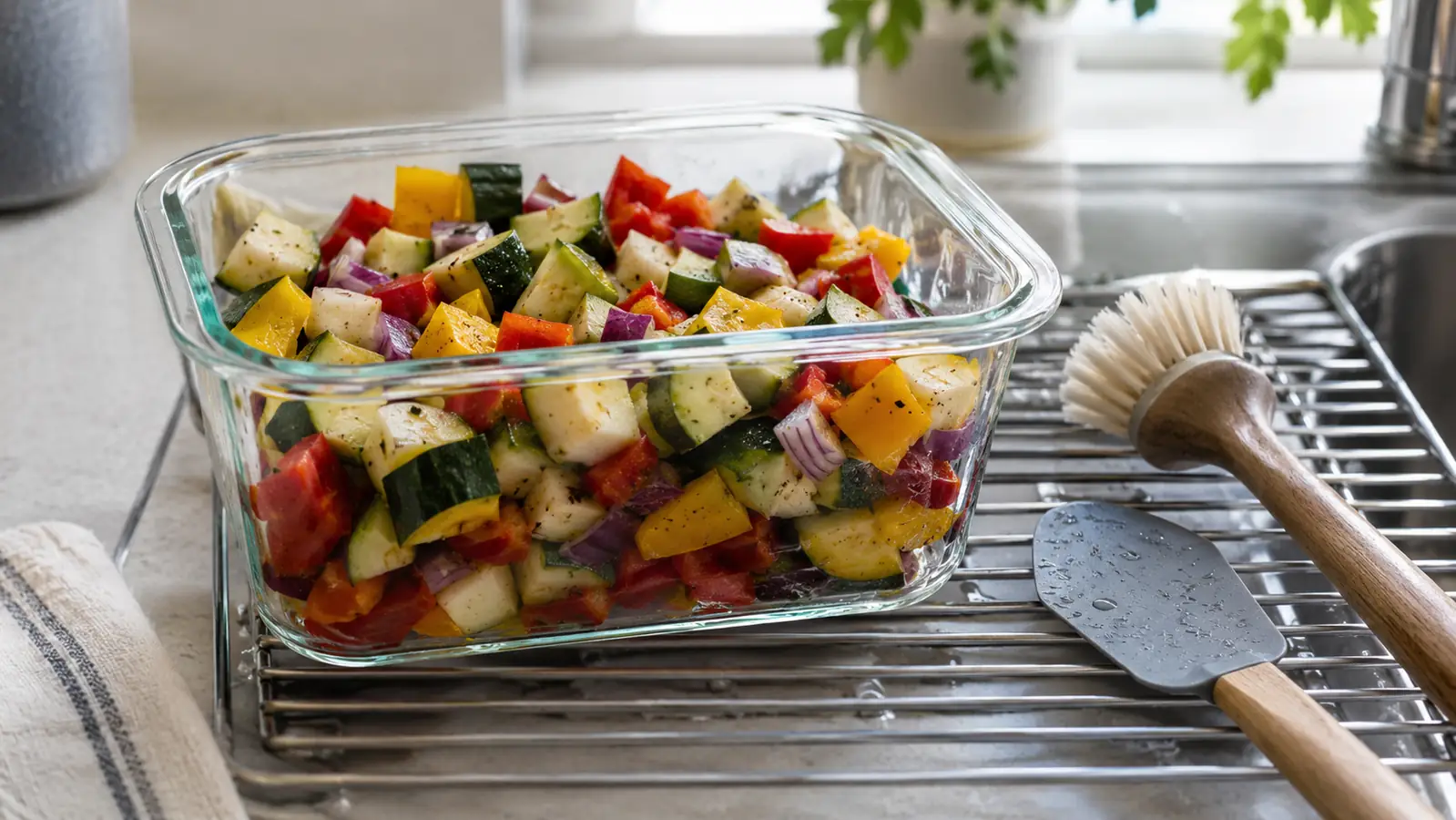
Here is what the ads do not show you: the cleanup. The chopper is dishwasher safe, and that is true, but the blades are sharp and the grid holds onto bits of onion in a way that a quick rinse will not fix. The included brush and scraper are not a gimmick. I use them every single time. I rinse the grid under the tap, push out anything stuck with the scraper, give the blades a once-over with the brush, and load the parts on the top rack. It takes about two minutes. That is the honest number.
Two minutes is not a big deal, but it is a real thing, and I think people deserve to know it before they buy. The chopper does not wash itself. The container, the grid, the blades, the spiralizer pieces, they all need attention. The brush reaches the places my fingers should not go, because the blades are genuinely sharp, which is the point of the tool and also the reason I keep the scraper handy instead of poking around with my fingers.
The other thing nobody tells you is that you will still chop some things by hand. Soft, ripe tomatoes come out more squished than diced, so I use a knife for those. Mushy fruit is the same story. The Fullstar is for firm vegetables, the ones that actually take the time and the tears. Once I understood that, I stopped being annoyed at the tool and started using it for what it is good at.
I have cooked for six people most nights for more than a decade. The Fullstar is the first chopper that has earned a permanent spot on my counter.
What It Actually Does Well
For firm vegetables, it is fast. A whole onion, peeled and halved, presses down into dice in about ten seconds. Peppers take one press per half. Celery I cut into lengths first, then press. The result is consistent enough that soups and casseroles cook evenly, and consistent is what matters when you are feeding kids who notice when the pepper chunks are different sizes.
It earns its counter space because it is genuinely compact. The footprint is about five inches by five inches, and it stands about ten and three-quarter inches tall. It weighs just under a kilogram, so it feels solid on the counter but easy to move. The body is BPA-free and PFAS-free ABS plastic, and the blades are rust-resistant stainless steel. With four kids eating out of this thing, the material list mattered to me.
It also cuts down on dishes, which is the quiet win. When I chop by hand, I use a cutting board, a knife, a bowl, and then I wash all of them. With the Fullstar, the food lands in the included container, I dump it into the pan, and I wash the chopper parts. That is fewer dishes on a night when I am already washing a full kitchen's worth.
And it gets used. That sounds like a small thing, but it is the whole thing. The food processor in my cabinet is excellent and it never gets used, because it takes longer to set up and wash than it saves. The Fullstar sits on the counter, ready to go, so it is the one I actually reach for.
Where It Falls Short
I already mentioned cleanup, so let me be fair and say it once: this is not a no-mess gadget. The grid holds onto food, the blades are sharp, and someone has to wash the parts. If you hate washing anything by hand, even for two minutes, this will annoy you. I have made peace with it because the tool saves me more time than it costs, but I would not want to pretend otherwise.
The spiralizer is the fiddliest part. My first zucchini noodles were a genuine mess, more broken pieces than noodles, and I almost gave up on that attachment. It took a few tries to find the right pressure and pace, and even now I go slower than I want to. If spiralizing is the only reason you are considering this chopper, I would look at a dedicated spiralizer instead. If dicing is the main job and spiralizing is a bonus, this does both well enough.
The container also fills up fast when you are cooking for a crowd. For a normal weeknight, it is perfect. For the potluck, I worked in batches and dumped each one into the big bowl. That is not a flaw exactly, but it is a limit, and limits are worth knowing before you buy.
And it is not a food processor. It will not puree, it will not shred cheese, it will not make dough, and it will not handle soft fruit. I have seen reviews that sound disappointed about this, and I understand it, but it is also a little unfair. This is a chopper. It chops. It does that one job better than anything else I own, and it does not pretend to do the rest.
What I Liked
- Chops onions, peppers and celery in seconds, not minutes
- Four blades and a spiralizer in one compact tool
- Included container catches everything, so fewer dishes
- Dishwasher safe, and the included brush and scraper make cleanup quick
- Small footprint, about five by five inches, so it earns counter space
- Rust-resistant stainless steel blades with a BPA-free and PFAS-free body
Where It Falls Short
- Cleanup is still a real step, and the grid holds onto bits
- Soft vegetables like ripe tomatoes come out squished
- The spiralizer has a learning curve, and my first noodles were a mess
- Container fills fast for big potluck batches
- Not a food processor; it won't puree, shred or handle soft fruit
The First Week vs. Six Months Later
The first week, I was skeptical. The chopper worked, but I was still reaching for my knife out of habit, and I kept waiting for the novelty to wear off. I also nearly gave up on the whole thing after that first spiralizer attempt, because the noodles were a disaster and I was annoyed. What I did not expect was that the habit would flip. Somewhere in the second week, I stopped reaching for the knife first and started reaching for the chopper.
Six months in, the differences are small and real. The blades still chop cleanly, the body still feels solid, and nothing has rusted or dulled. The plastic has not stained from the tomato juice, which surprised me, because I expected at least one stubborn orange spot. The brush and scraper still look new, which tells you how often I use them. I have not replaced anything, and I have not once thought about putting it in the donation box.
The honest version is that I do not think about the chopper at all anymore, and that is the best thing I can say about it. It is just there, on the counter, doing its job. The onions get diced, the peppers get diced, the soup gets made, and nobody has to wrestle with a machine or wash a food processor bowl at nine o'clock at night. That is what six months of use looks like.
What I Wish I'd Known Before Buying
First, I wish someone had told me that the chopper works best when you stop trying to make it do everything. It is not a magic box. It is a tool for the repetitive jobs, and the moment I matched it to the right jobs, it stopped being a gadget and started being part of the routine. That sounds obvious, but it took me a couple of weeks to get there.
Second, I wish I had known how much the included tools matter. The brush and scraper look like afterthoughts, but they are the difference between a two-minute cleanup and a five-minute frustration. I would not want this chopper without them. Keep them somewhere safe, because the grid will find every bit of onion you thought you washed away.
Third, I wish I had known that the real win is not the time it saves on one onion. It is the time it saves across a whole week. Ten seconds here, twenty seconds there, one less cutting board to wash, one less bowl, one less moment of dread before dinner. Add that up over six months and it is hours. That is the part nobody puts on the box.
Alternatives I Considered
I have a food processor. It is a good one. It lives in the cabinet, and I pull it out maybe twice a month, because by the time I have assembled the bowl and the lid and the feed tube, I could have chopped the onion by hand. The Fullstar is the opposite: it is always out, always ready, and the whole thing takes less time than finding the food processor's parts.
I also considered a dedicated spiralizer before I bought this, and honestly, if spiralizing were my main goal, I would still buy one. But for my kitchen, the question was never which tool is best at one job. It was which tool gets used. The Fullstar gets used because it does the daily job, dicing, without any setup. The spiralizer is a bonus that shows up on the nights we want zucchini noodles.
I will also say this: I have owned other choppers over the years, and most of them ended up in the donation box. The difference is the stainless steel blades and the solid feel of the body. The others flexed and dulled. This one still chops like it did on day one, which is the real reason it is still on my counter.
Who This Is For
Buy this if you cook for four or more people most nights. Buy it if you chop onions and peppers more than twice a week, or if you find yourself skipping vegetables because the chopping feels like too much work at the end of a long day. Buy it if you want a tool that lives on the counter and actually gets used. And buy it if you are the person who makes the salsa, the soup, or the taco filling for everyone else. That person deserves a faster way to dice.
In our house, that person is usually me, but not always. Hannah has started making the salsa on taco night, and she uses the chopper with me standing right there. It is one of the few kitchen tools I trust her with, because the food lands in the container instead of all over the counter, and because she can see exactly what she is doing. That is a small thing, but it is a nice thing.
Who Should Skip It
Skip it if you cook for one or two and a single onion lasts you a week. Skip it if you have a food processor you genuinely use and love. Skip it if the idea of rinsing a grid and brushing blades, even for two minutes, is enough to make you reach for the knife instead. And skip it if you want one tool that does everything, because this is a chopper, and it is honest about being one. For everyone else, I think it earns its place.
I will also say this: if you are the kind of cook who actually enjoys the chopping, who finds the rhythm of a knife relaxing, this tool is not for you. It is for the nights when you do not want to chop, when you are tired and the kids are hungry and the onion still has to become dinner. On those nights, the Fullstar is worth every bit of its counter space.
The chopper I reach for six nights a week
After six months of cooking for six, the Fullstar is still earning its spot on my counter. Check today's price on Amazon and see if it earns one on yours.
Amazon Check Today's Price on Amazon →